
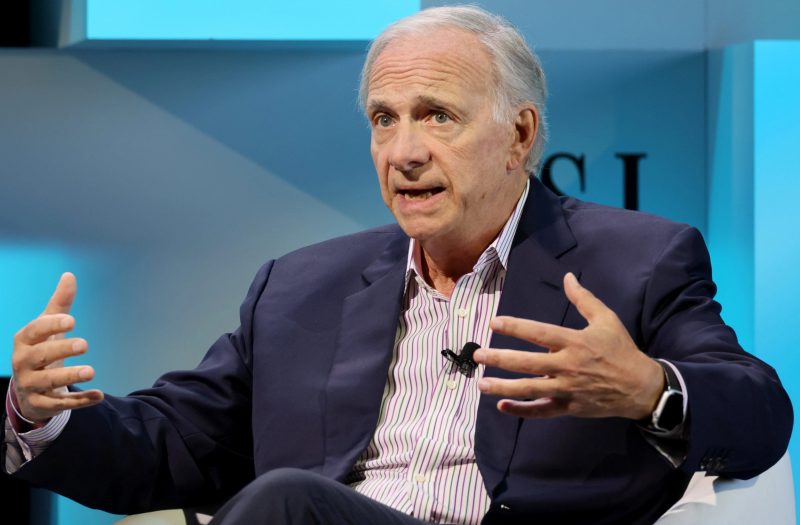
Bitcoin Will Never Seriously Challenge Gold, Says Hedge Fund Billionaire Ray Dalio
The debate between bitcoin and gold refuses to fade. Investors argue about it on trading floors, podcasts, and social media every single day. Some believe bitcoin will replace gold as the ultimate store of value. Others think gold still sits on the throne.
Hedge fund billionaire Ray Dalio recently added fresh fuel to that debate. The Bridgewater Associates founder made it clear that bitcoin will not dethrone gold anytime soon. On the “All-In Podcast,” Dalio explained why the two assets are not even playing the same game.
Watch what the hedge fund tycoon has to say exclusively from 11:24 to 28: 21.
Gold holds a role in the global financial system that bitcoin cannot match. That belief comes from decades of studying markets, currencies, and financial crises.
“There Is Only One Gold”
Central banks across the world hold large piles of gold in their reserves. Governments treat it as a financial anchor during uncertain times. Dalio describes gold as the most established form of money because it has survived every economic cycle.
Bitcoin does not share that same legacy. The digital currency appeared in 2009 and still carries the reputation of a young experiment. Dalio believes that history matters because trust builds slowly over centuries, not in a decade.
The 76-year-old hedge fund billionaire also points out that gold exists as a physical asset. It does not rely on code, servers, or network infrastructure to maintain value. That physical presence creates confidence during periods of extreme financial stress.

Render / Pexels / Ray Dalio’s argument begins with a simple fact that most investors already know. Gold has served as money and wealth protection for thousands of years.
Bitcoin Looks More Like a Risk Asset
Dalio’s second point focuses on how bitcoin behaves in real markets. He argues that bitcoin often moves like a high-growth technology investment rather than a safe haven.
During market turmoil, investors tend to sell risky assets to protect capital. Dalio believes bitcoin could fall into that same category when fear spreads across financial markets. In that scenario, traders may dump bitcoin alongside volatile stocks.
Gold usually behaves differently during those moments. Investors often rush toward gold when uncertainty rises. The metal acts as a financial shelter when confidence in currencies or markets begins to crack.
Dalio warns that the next global crisis could test bitcoin in ways investors have not seen yet. If that crisis triggers a wave of panic selling, bitcoin could move with risk assets rather than against them.
Central Banks Still Trust Gold

Joel Joel / Pexels / Banks control massive pools of capital and shape the global financial system. Their choices often signal what the world considers real reserve assets.
Central banks buy and store gold in large quantities. They treat it as a neutral asset that sits outside the control of any single government. That neutrality makes gold extremely valuable during periods of geopolitical tension.
Dalio doubts central banks will ever accumulate bitcoin the same way. He believes governments may hesitate to rely on an asset that operates on a public blockchain. Every transaction leaves a digital trail that can be tracked and analyzed.
Gold offers far more privacy in comparison. A vault full of gold bars does not broadcast information across a global network. That difference matters greatly to institutions that value financial secrecy.
Dalio also raised concerns about technological uncertainty. Bitcoin relies on complex cryptography and distributed computing systems to operate securely. Those systems work well today, but future technology could challenge them.
Quantum computing often appears in discussions about long-term security risks. Some experts believe powerful quantum machines could eventually break current cryptographic systems. Dalio sees this possibility as another reason institutions may hesitate to fully trust bitcoin.
More in Money
-
`
 How Does Tech Giant Meta Make Money? A Closer Look
Meta is one of the biggest names in tech. But many people still wonder how it actually brings in billions of...
November 28, 2025 -
`
Kanye West Accuses Kim Kardashian of Distancing Children From Him
Kanye West is not holding back. The 48-year-old rapper says Kim Kardashian is putting space between him and their kids. According...
November 22, 2025 -
`
Meet Smith Lake Jake, Alabama Groundhog Celebrity Who Stars in a New Movie
Smith Lake Jake didn’t start out as a celebrity. Born around 2005 and adopted by Ginger and Heath Whitworth in Graysville,...
November 7, 2025 -
`
Minnesota Cannabis Dispensaries Are Empty in a Crippling Supply Shortage
Minnesota legalized adult-use cannabis, issued retail licenses, and cut the ribbon on a new market. But now? Dispensary shelves are bare....
October 31, 2025 -
`
How Losing a Family Pet Can Teach Your Kids About Death & Grief
No one wants to see their kid cry over a pet, but it happens. Pets don’t live forever, and when they...
October 24, 2025 -
`
How to Ensure Mindful Living in the Suburbs
Mindful living in the suburbs doesn’t need a retreat, a guru, or a schedule packed with meditation classes. It just needs...
October 17, 2025 -
`
Paris Hilton’s New Kids Show Is the One Even Her Own Kids Actually Watch!
Paris Hilton isn’t just running empires and DJing in Ibiza. She is also making bedtime TV that actually passes the toddler...
October 10, 2025 -
`
Why this Management Guru Wants You to ‘Waste’ Money to Grow Your Business
Luke Williams has a message that goes against everything most business owners believe: You need to waste money. Not recklessly, but...
October 3, 2025 -
`
5 Things We Lose As a Society When Teens Don’t Babysit
Babysitting used to be a rite of passage for teens. It wasn’t just about earning pocket money. It built trust, responsibility,...
September 27, 2025









More From Wordsa
-
How Mindfulness Boosts Memory and Future Planning Skills
A small shift in daily habits can influence how well the brain keeps track of future plans. Recent findings suggest that...
Life HacksApril 30, 2026 -
David and Victoria Beckham Push for Mediated Reunion With Son Brooklyn
Tension within one of the most talked-about families in entertainment continues to build as David Beckham and Victoria Beckham attempt to...
CelebrityApril 23, 2026 -
Selling Your Business? Watch Out for These Critical Mistakes
Selling a business is often the most significant financial event a business owner will experience. The outcome affects not only immediate...
MoneyApril 17, 2026 -
Why Single-Family Rentals Have Become the New Foundation for Family Stability
Choosing a home as a family isn’t just about finding the right place—it’s about managing competing priorities like cost, space, and...
FamilyApril 10, 2026 -
Gen Z’s Viral “Rawdogging Boredom” Trend May Help Fix Their Attention Span
A strange trend is taking over TikTok. Gen Z creators are filming themselves sitting in silence, doing absolutely nothing for minutes...
Life HacksApril 3, 2026





You must be logged in to post a comment Login